 Donate
 Alumni
 Login & Email


 Transferring colleges is more common than most students realize and for those who've decided healthcare is their path, it's often the most important academic decision they'll make. This guide breaks down everything you need to know: why students transfer, what questions to ask before you move, how credits work in healthcare programs, and how to put together a strong application at NMC.
Why Students Consider Transferring Colleges
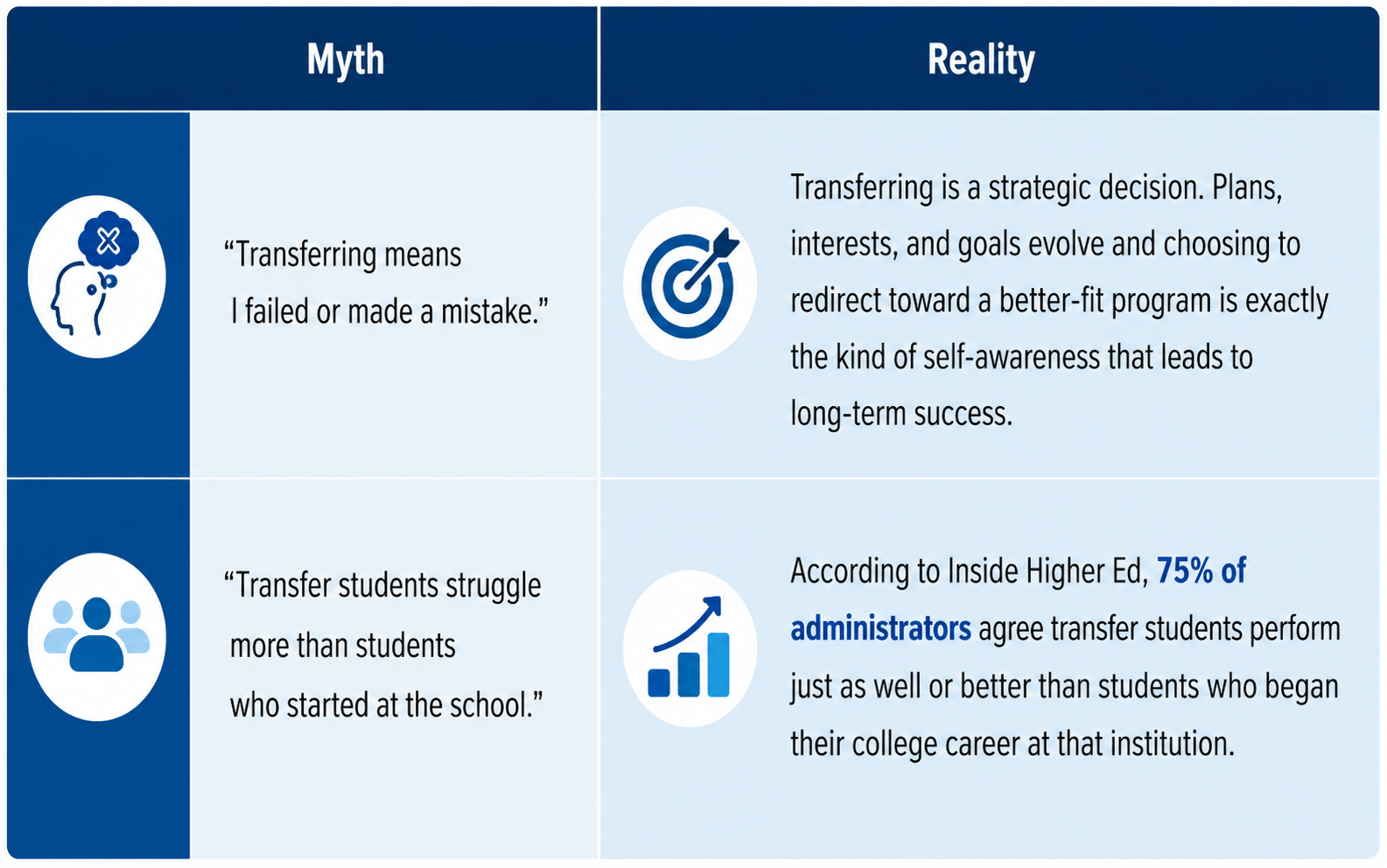
The decision to transfer colleges is a highly personal one, with students choosing to do so for a wide variety of reasons. Whether you are looking to change majors or prefer a school closer to home, you want to know that your academic success will not be compromised. According to Inside Higher Ed, about 75% of administrators at both two- and four-year colleges agree that transfer students perform just as well or better than students who began their college career at their schools.
Before deciding which school to transfer to, reflect on your academic goals and personal learning style, as this will help you select the best college for your needs. Below are just a few reasons why students transfer colleges:
Academic Fit: Finding the Right Program for Your Goals
One of the top reasons that students choose to transfer schools is because the receiving school offers academic programs that better align with their needs and goals. For example, at Nebraska Methodist College (NMC), many of our transfer students apply for admission because they wish to pursue a career through our healthcare degree programs.
Personal Factors: Location, Support and Campus Culture
In addition, students sometimes find that the school where they are currently enrolled does not align with their personal values or offer the lifestyle they expected. Thus, they may choose to transfer schools for personal reasons, such as:
- Transferring to a school that they feel offers a better location.
- Transferring to a school with more student support resources available.
- Transferring to a school that is a better cultural fit.
Career Clarity: Changing Majors or Choosing a New Path in Healthcare
College is a time for growth and exploration, and some students enroll in a degree program that ultimately proves not to be suitable for them. In the event that you decide to change majors or choose a new career path, you may need to transfer schools to enroll in the program that is the best fit for you. In particular, if you are considering a healthcare career path, you will want to opt for a school that specializes in healthcare degree programs and offers hands-on learning opportunities that allow you to develop critical clinical skills.
Questions to Ask Before Making the Move
Before beginning the transfer application process, do your due diligence. The specific steps will vary from one school to another, with each college having different requirements for student admission, credit transfer and documentation.
As you consider which college to transfer to, these are a few questions you should ask:
Will My Credits Transfer — and How Many?
The number of credits you are able to transfer and apply to your degree requirements at your new school may vary based on the program in which you are currently enrolled and the major you plan to pursue after transferring. According to the U.S. Government Accountability Office (GAO), transfer students in the United States lose an average of 43% of their credits when transferring, largely because they do not understand which credits will be considered relevant to their new degree program. By taking the time during the application process to explore how your individual credits will transfer, you will be better equipped to make a thoughtful and informed decision.
Is the New Program Aligned With My Career Plans?
Carefully contemplate the curriculum of the prospective degree program to ensure it aligns with your career goals. For instance, if you are considering a career in healthcare, you might transfer to a college that specializes in healthcare degrees.
What Academic and Personal Support Systems Are in Place?
It is crucial to transfer to a school that provides you with the support you need to be successful. Ask admissions counselors directly about the following and don't accept vague answers:
- Is there a dedicated transfer student advisor or coordinator?
- What tutoring, writing, and academic support services are available?
- How does the school support students during clinical placements?
- Are mental health and wellness resources available to online or part-time students?
Transferring Into a Healthcare Program: What to Know
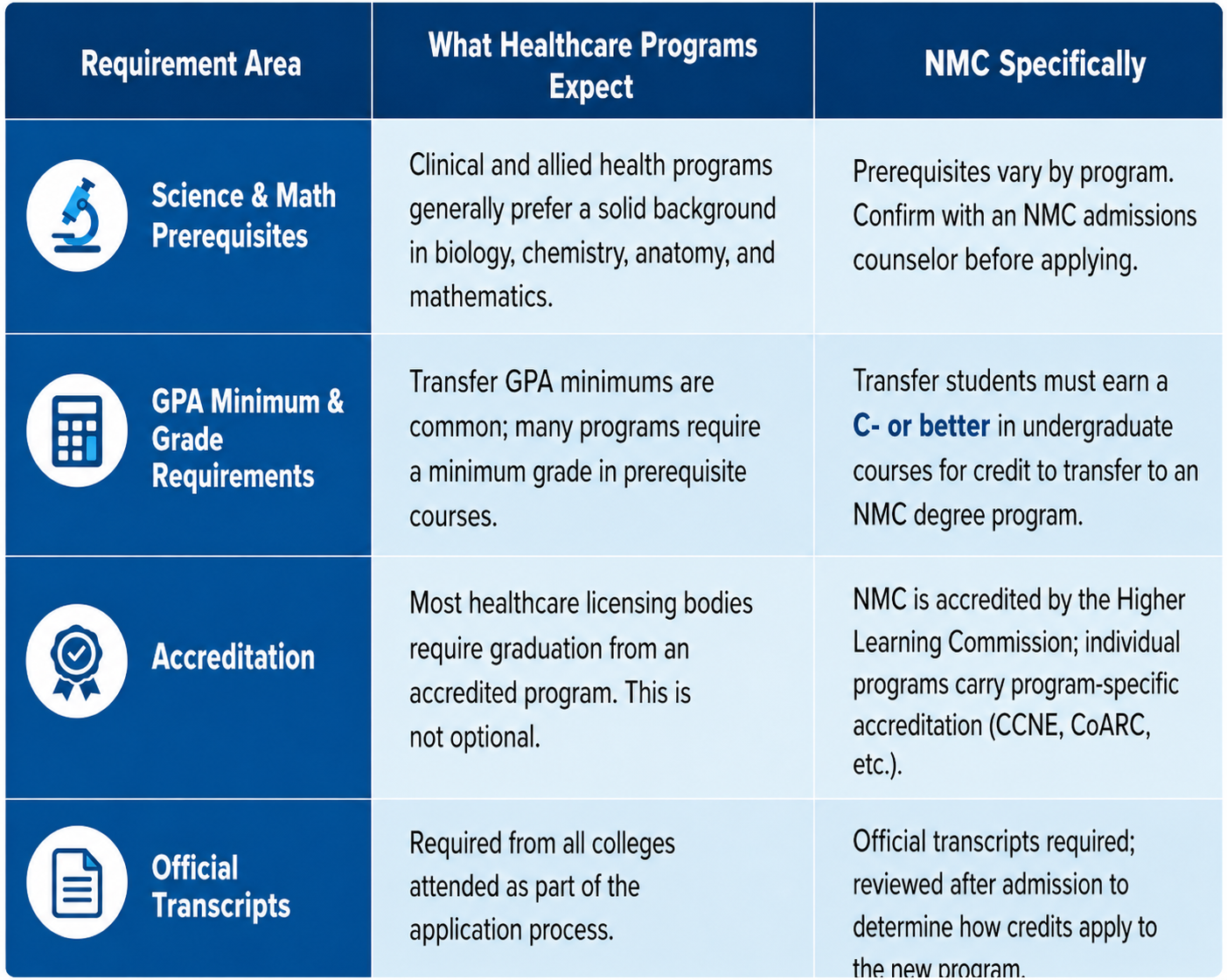
The degree requirements for healthcare programs are distinct from those in other fields. If you are transferring into a healthcare program, be sure to take a closer look at the transfer admission and credit transfer process.
Evaluating Transfer Credit and Curriculum Compatibility
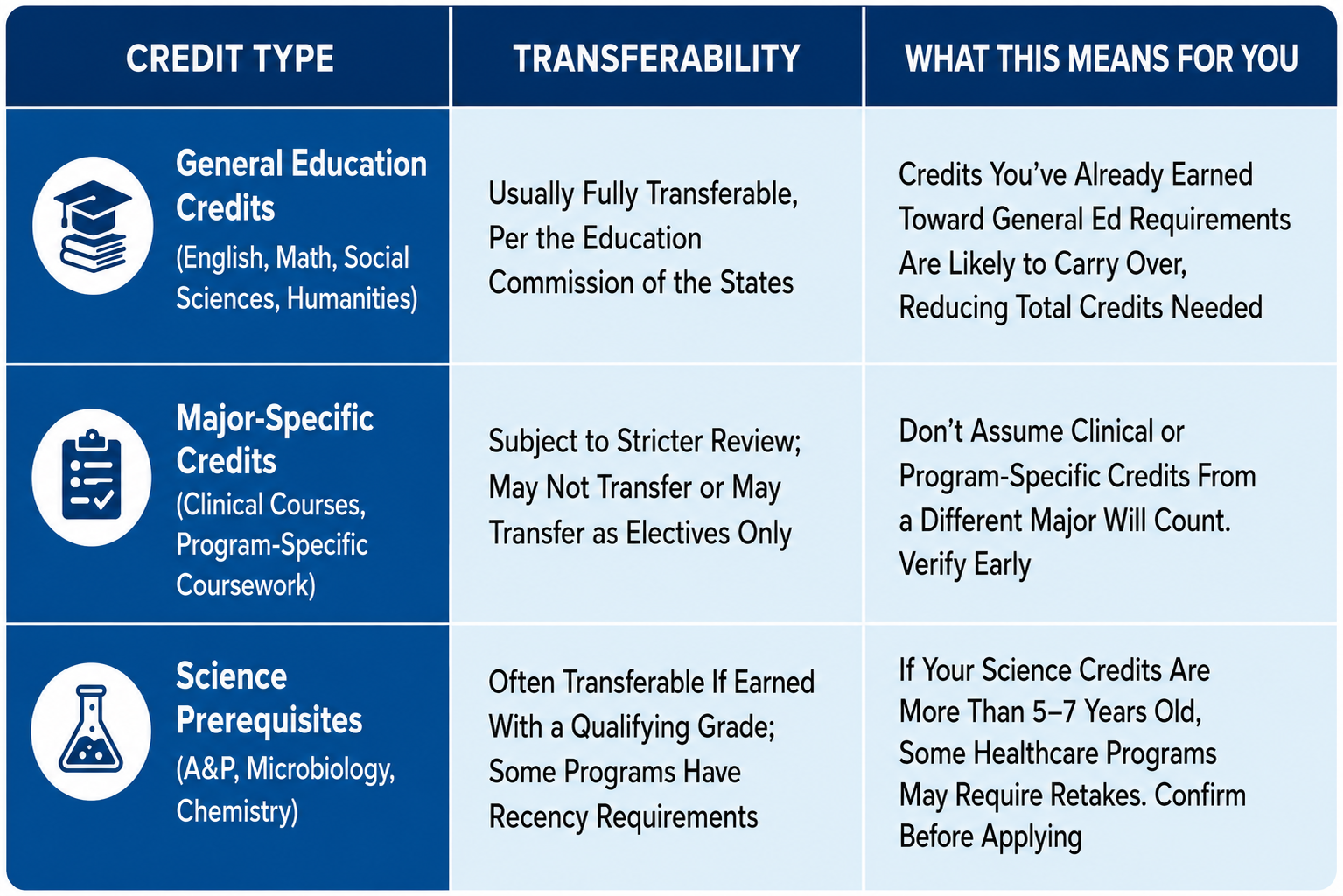
Not all credits transfer equally. In healthcare programs, the distinction between general education credits and major-specific credits matters a great deal. Here's how to think about it:
How to Request a Transcript Review Before You Apply
- Set up a Transferology account at transferology.com (NMC's free credit evaluation tool for prospective transfer students).
- Submit your completed coursework through Transferology to see which credits may transfer to your intended NMC program.
- Connect with an NMC admissions counselor, after you submit, a counselor will reach out to walk you through what your transfer pathway could look like and answer specific questions about your credits.
- Official transcript review happens after you apply and are admitted but the Transferology preview gives you a reliable picture before you commit.
Building a Strong Transfer Application
Your transfer application tells NMC's admissions committee and other admissions teams who you are, where you've been, and where you're going. Here's how to make it count:
Writing a Clear and Purposeful Personal Statement
A clear, concise personal statement can offer a glimpse into who you are and why you want to transfer colleges. According to the Universities and Colleges Admissions Service, you can write an effective personal statement by:
- Crafting a strong (but short) opening.
- Sharing your enthusiasm for the program you are pursuing.
- Highlighting your practical skills and personal interests to showcase how you are a great fit for this program.
Highlighting Growth, Motivation and Readiness for Change
Don't be afraid to share your story within your personal statement or essay. Transferring colleges is common and nothing to shy away from. Incorporate anecdotes providing insight into your personal growth journey and illustrating that you are ready to begin this next chapter.
Securing Transcripts, Recommendations and Supporting Materials
The materials required for your transfer application may vary based on the school. Generally speaking, transfer students should include the following in their application packet:
- All high school transcripts and GED test scores (if applicable)
- All official college transcripts
- Written statement
- Completed program/career awareness questionnaire
Support Systems That Help Transfer Students Succeed
NMC builds support into the transfer process from day one. When you transfer to NMC, you get:
- A dedicated admissions counselor who works with you through the transfer process and helps you understand your credit evaluation before and after admission
- Transparent credit transfer tools including Transferology access before you even apply
- Academic advising to keep you on track with clinical requirements and degree progress
- Student support services including tutoring, writing assistance, and health and wellness resources
- A healthcare-specific community: faculty and staff who understand the demands of nursing and allied health programs because they've lived them
Making the Transition Smooth and Successful
Once you've been admitted, your first semester sets the tone. Do these three things early:
Registering for Classes and Meeting With Faculty Early
After selecting your classes for the new semester, reach out to your professors and instructors in advance. Let them know that you are new to the campus network and open to meeting to discuss ways you can be successful in your chosen program.
Setting Academic Goals and Tracking Your Degree Progress
As you embark on your new chapter, take the time to set clear, realistic and measurable goals for your academic experience. Continue to work closely with academic advisors to track your degree progress and ensure you are meeting all requirements (like clinical experience).
Final Check-In: Is Transferring the Right Move for You?
Transferring colleges is a major decision for your education and career. Now is the time to decide: is transferring the right choice for your academic and career goals? Two things worth keeping in mind as you decide:
Ready to Transfer to NMC? Here's How to Get Started.
When you are ready to make the switch, it's important to know how to transfer colleges. The transfer requirements and application process may vary from one college to another.
At NMC, we offer a simple, streamlined process for our transfer students. Our admissions coordinators will work closely with you to ensure you are able to easily navigate the transfer student admissions process.
NMC offers a straightforward, transparent transfer process that is designed to eliminate the uncertainty that keeps many students from making the move they know they should. Here's how to start:
- Preview your credits on Transferology: free, no application required. See which of your existing credits may apply to NMC's programs before you commit to anything.
- Request more information: NMC admissions counselors will reach out to answer your questions about specific programs, your credit situation, and next steps.
- Visit campus: see where your clinical training will happen, meet faculty, and get a feel for the NMC community.
- Apply: when you're ready, NMC's admissions team will guide you through every step of the transfer student admissions process.